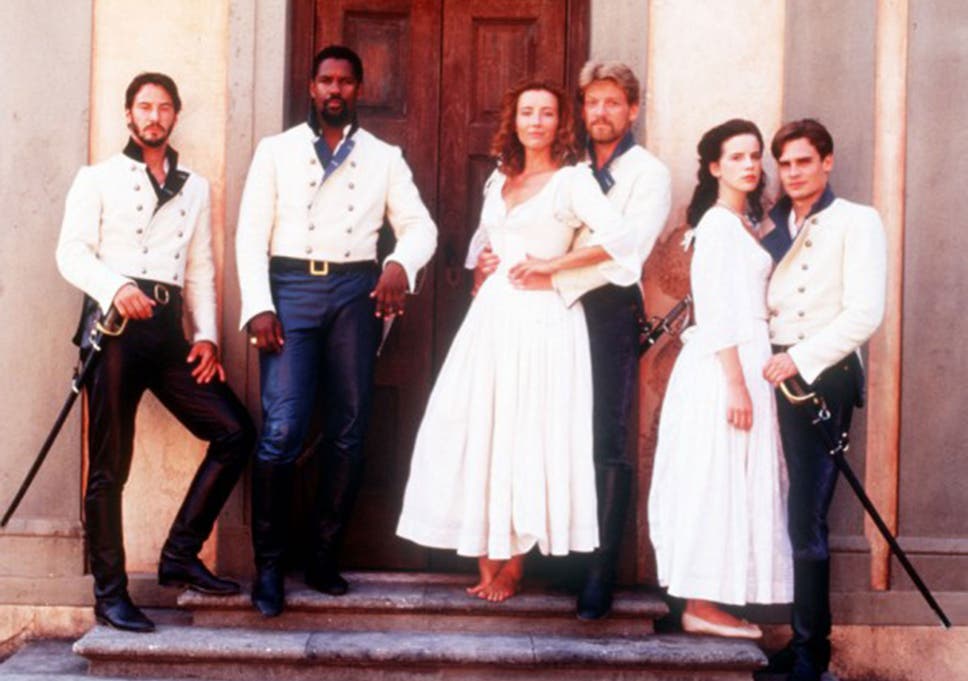
I believe that the real issue behind William Shakespeare’s play, Much Ado About Nothing, which led to the defilement of Hero’s honor and to her marriage with Claudio, was undoubtedly the work of the silent mastermind, Don John. It would be rash for us to hold the concept of misunderstanding responsible for the ruining of their marriage as it would ignore the evil intent of Don John, as it was his plan to torture his brother and his friends that led to the eventual public dispute. Despite this, I sympathize for Don John and understand his reasons for wanting to hurt his brother and his companions. As such, I cannot impart all the blame on Don John. To understand why Don John is not the criminal his brethren paint him out to be, we must first dismantle the character of Don John.
Don John, often referred to as the bastard, is the half brother of Prince Don Pedro of Aragon and a member of his company. Don John is depicted as being quiet and mysterious by members of Leonato’s house and even by people close to him such as Benedick and even Claudio. We see just how mysterious he is when he encounters Hero at the masquerade party and she gives off this face of confusion and shock, showing just how little people connect with him. Even by his own brother and the people who are close to his family, Don John is isolated and often belittled as the bastard. No wonder he held such resentment for Don Pedro and the rest of Leonato’s house. His scheme against the wedding of Claudio and Hero was not from the unwarranted hatred of a man embraced by his sibling and that of his friends, but instead resided in the heart of a man rebuked and cast aside by members of his own family and of his company. It goes without saying that Don John is a victim of neglect and detest and used his plot of ruining the marriage of Hero and Claudio as a way of retaliation against the pain that the people closest to him had caused him.
Going back to the real issue of the movie, Much Ado About Anything, it is not Don John who is guilty of instigating the issue that led to the movies climax (the humiliation of Hero and her death), but instead, it is Don Pedro, Benedick, Claudio, Leonato, and the rest of the people in the house who is guilty for their own destruction. Much Ado About Nothing illustrates how toxic relationships can hurt us when we least expect it and how it is essential that we treat the people around us with respect as we never know what might happen if we don’t. Much Ado About Nothing reminds me of another story set in Feudal Japan named Dororo. Written by arguably the most influential manga artists of all time, Osamu Tezuka, Dororo chronicles the journey of the newborn son of a ruthless warlord who was thrown out of his home and left for dead as a token of gratitude towards the gods. Over the years, Hyakkimaru fights many demons (both literally and figuratively) to regain what was once his birthright. Dororo, though many of its core elements involve fantasy, shares many similarities to Much Ado About Nothing. They both involve siblings who became estranged and later become sworn enemies because one sibling is elevated and the other is degraded. They both contain motifs of family and what it means to treat others well. They also both warn readers about the dangers of treating others poorly, especially when they are family. In Much Ado About Nothing, it is the cruel treatment of Don John that leads him to hurt the rest of the cast. In Dororo, Hyakkimaru’s abandonment leads him to hunt for his birthright, ultimately tearing down the empire his father built, as well as killing his brother in the process.

Other Drafts and Brainstorming: https://docs.google.com/document/d/1DE20cXd1dvmq32f_ZGkgAnK7EDsN29RBWPAZGBijseM/edit?usp=sharing
 Natte's Writing Blog